
How to Crochet a Curve in Amigurumi Using Stitch Count (No Wire Needed)
Learn how to crochet a smooth curve in amigurumi using simple stitch count adjustments to shape natural bends without sewing or wires.
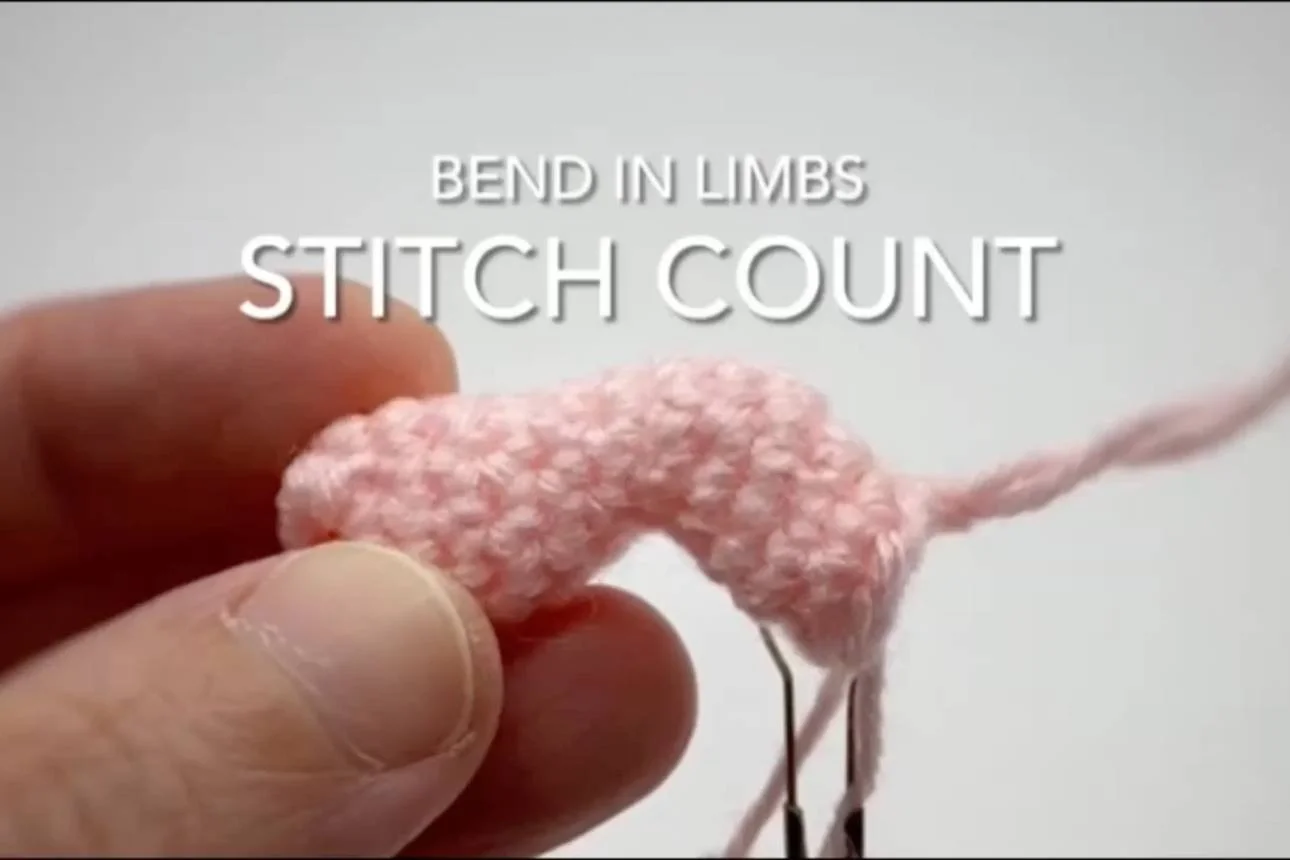
Table of Contents Show
Why Crochet Curves Matter in Amigurumi
Straight shapes can make amigurumi look stiff or overly structured. Adding curves allows your pieces to feel more natural and expressive — whether it’s a bent arm, a curved tail, or a subtle shift in posture.
This technique gives you control over shaping without using wires or extra sewing.
Where This Bend Fits In Amigurumi Shaping
There are a few different types of bends you can create in amigurumi:
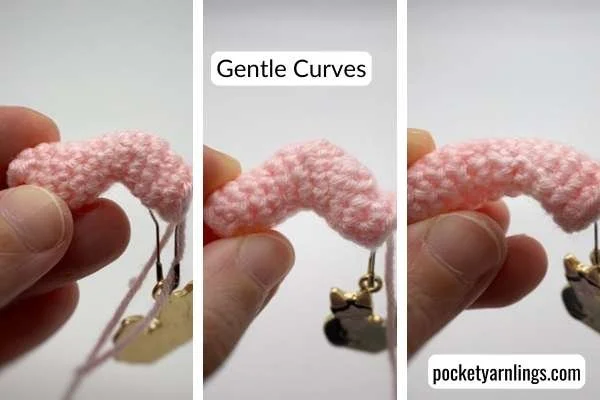
Gentle curves (smooth, gradual shaping)
Right angle bends (90° turns)
Sharp bends (steeper, more dramatic angles)
In this tutorial, we’re focusing on gentle curves.
💡 If you want a full breakdown of all bend types, check out the complete guide here.
Start with a Basic Cylinder (Used in All Bend Techniques)
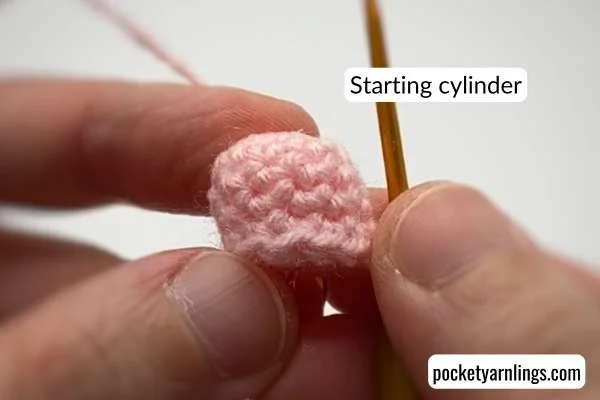
Most bend techniques in amigurumi start from the same foundation — a simple cylinder worked in the round.
For this tutorial, we’ll be using a small cylinder of 10 stitches in the round.
You can easily adjust this depending on your project:
smaller limbs → 4–6 stitches
medium limbs → 6–8 stitches
larger pieces → 10 stitches or more
The shaping method stays the same — only the size changes.
Here’s a simple starting point:
Round 1: Magic ring sc 10 – 10 sts
Round 2: Sc 10 – 10 sts
Rounds 3–5: Repeat Round 2 – 10 sts
👉 This creates a short, even tube that acts as your neutral base before shaping begins.
How to Crochet a Curved Tube Shape
Start with a Simple Base Shape
Once your cylinder is complete:
keep your stitch count even
continue working in rounds
prepare to introduce shaping
👉 This neutral base allows the curve to form cleanly and predictably.
How the Curve Forms (The Stitch Count Trick)
The curve is created by shifting stitch balance across the round.
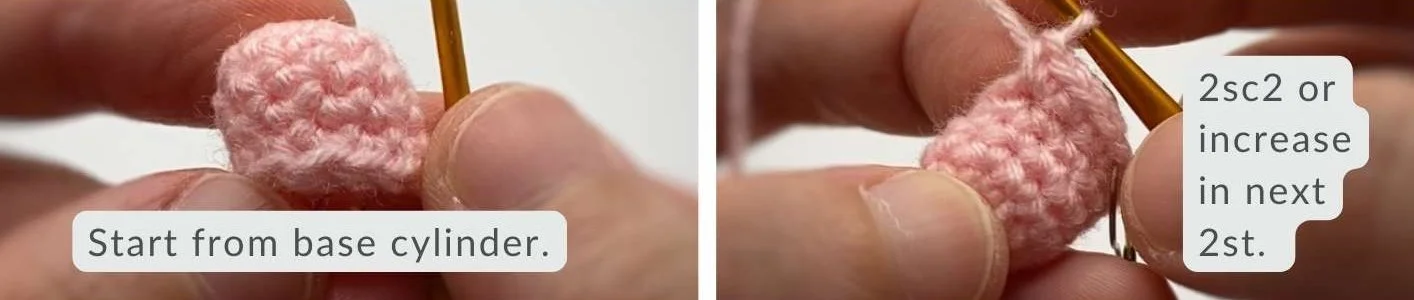
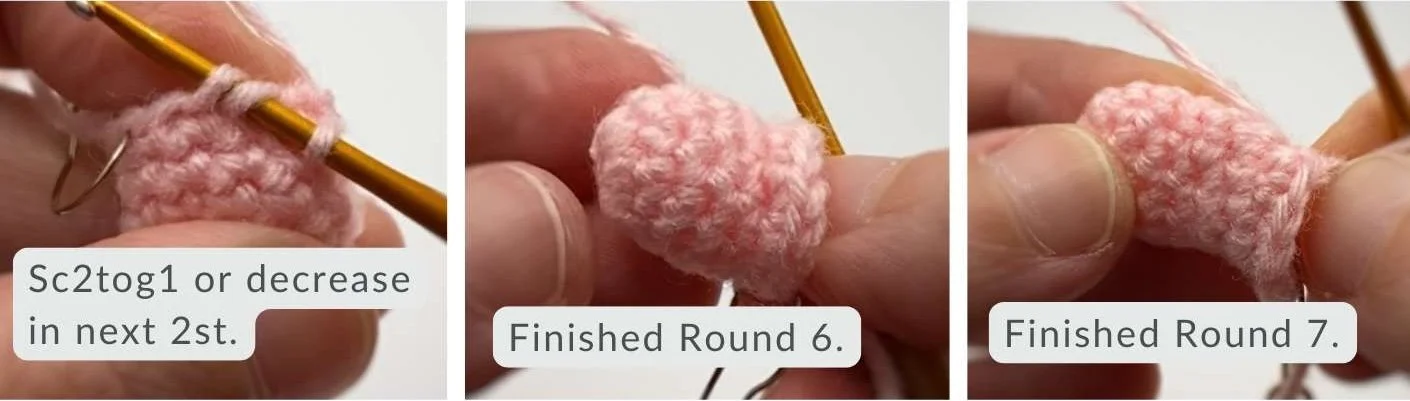
Increase on one side (2 sc in the same stitch) → This side expands and forms the outer curve
Decrease on the opposite side (sc2tog) → This side contracts and forms the inner curve
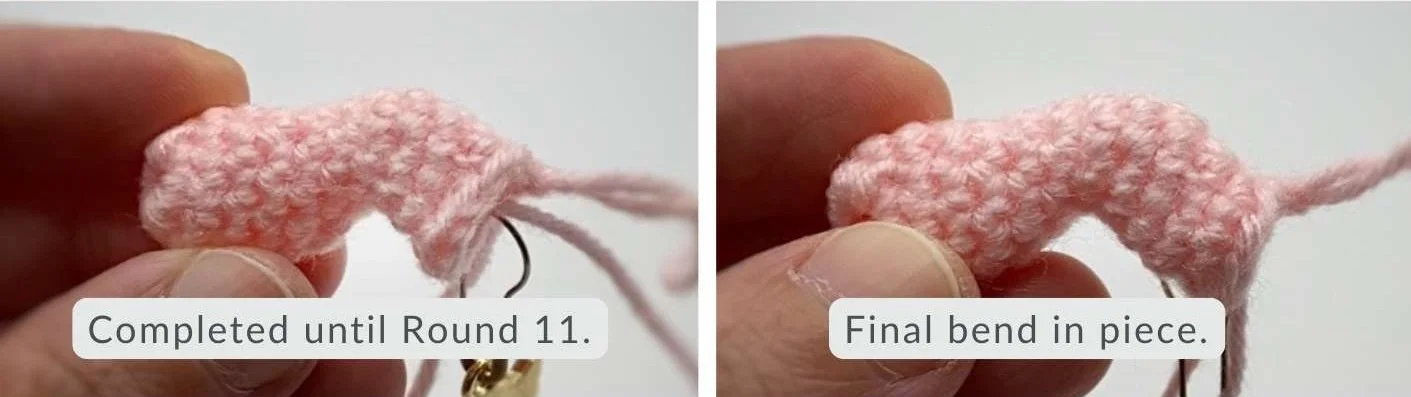
As you repeat this combination over several rounds, the piece naturally begins to bend.
What the Finished Curve Should Look Like
A gradual, smooth bend
No sharp corners
Even stitch structure
Built slowly over multiple rounds
The curve should feel controlled and intentional, not twisted.
Basic Stitch Count Pattern for a Crochet Bend
Here’s a simple example:
Pattern Snippet
Round 6: Sc1, 2 sc in next st, sc2, sc2tog, sc1 – 10 sts
Rounds 7–11 (5 rounds): Repeat Round 6 – 10 sts
Round 12: Sc 1 around – 10 sts
Round 13: Repeat Round 12 – 10 sts
Quick guide:
Increase = inner curve
Decrease = outer curve
Watch How the Curve Forms Step-by-Step
If you prefer to see how the stitches come together, you can follow along in this video below. Notice how the increases form the inner curve while the decreases pull the outer side inward.
How to Control the Shape of Your Curve
Why Your Crochet Starts Twisting (And How to Fix It)
If your piece starts twisting instead of forming a smooth bend, it’s usually because:
The shaping is repeated for too many rounds
The stitch imbalance continues too long
👉 Instead of bending, the piece forms a spiral.
Don’t Repeat This Step Forever (Important!)
This is the key step many crocheters miss:
Stop repeating the increase/decrease rounds once the bend forms.
After that:
switch to regular single crochet (sc around)
maintain the shape
This stabilizes the bend so it stays in one section instead of continuing to curve.
👉 This is what turns a curve into a controlled bend.
How to Use This Technique in Amigurumi Designs
This gentle curve method is incredibly versatile. You can use it to create:
Bent knees (for sitting dolls)
Curved arms or elbows
Tails with natural movement
Subtle head or neck tilts
It’s one of the simplest ways to add personality and realism to your designs.

Other Ways to Create Bends in Amigurumi
If you’re exploring different shaping techniques:
Stitch count → gentle, gradual curves
Stitch height → stronger curves
BLO/FLO → subtle, controlled curves
Each method creates a different type of bend depending on how much control you need.
👉 If you’d like a bigger picture of how all the bend techniques fit together, you can find them in the Ultimate Guide on How to Crochet Bends in Amigurumi (9 Ways to Shape and Control Curves).
Try Your First Amigurumi Bends
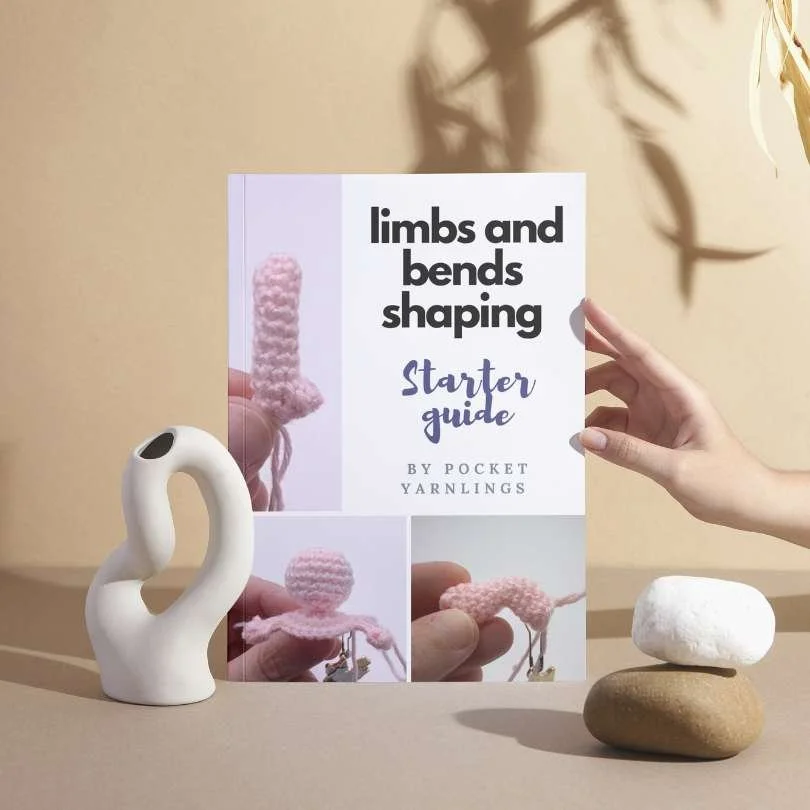
Put what you’ve learned into practice with easy arm, leg, and bend patterns. Grab it free over here.
Want to Explore More Types of Bends?
This stitch count method is just one way to create curves.
There are also:
gradual bends
perpendicular bends
steep bends and split bends
Each method creates a different effect depending on how you shape your stitches.